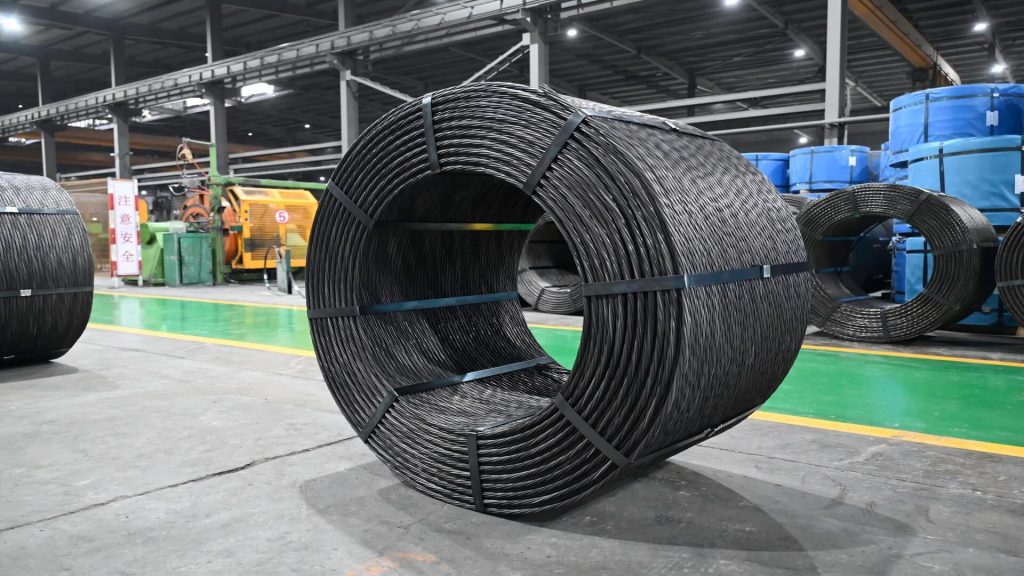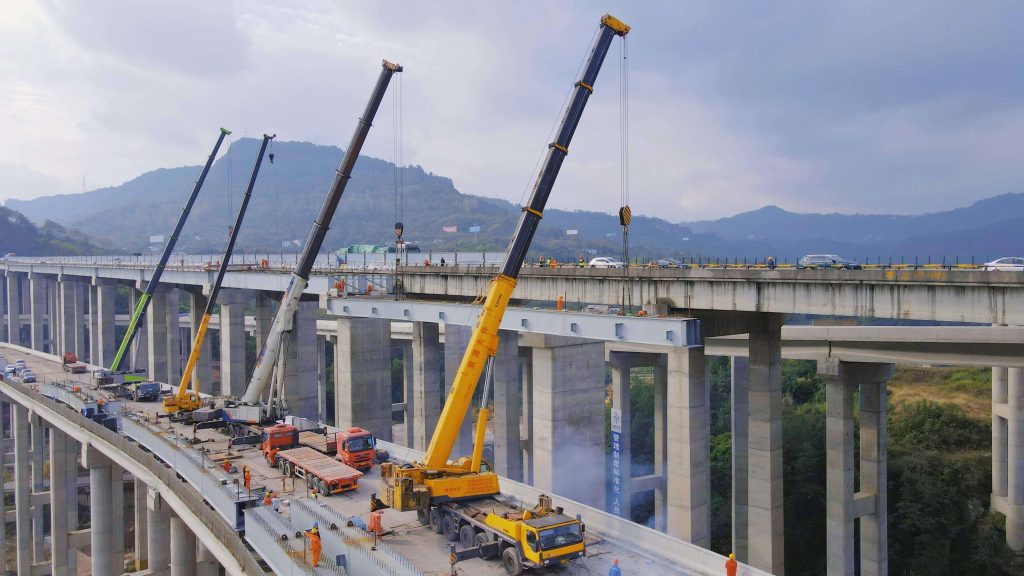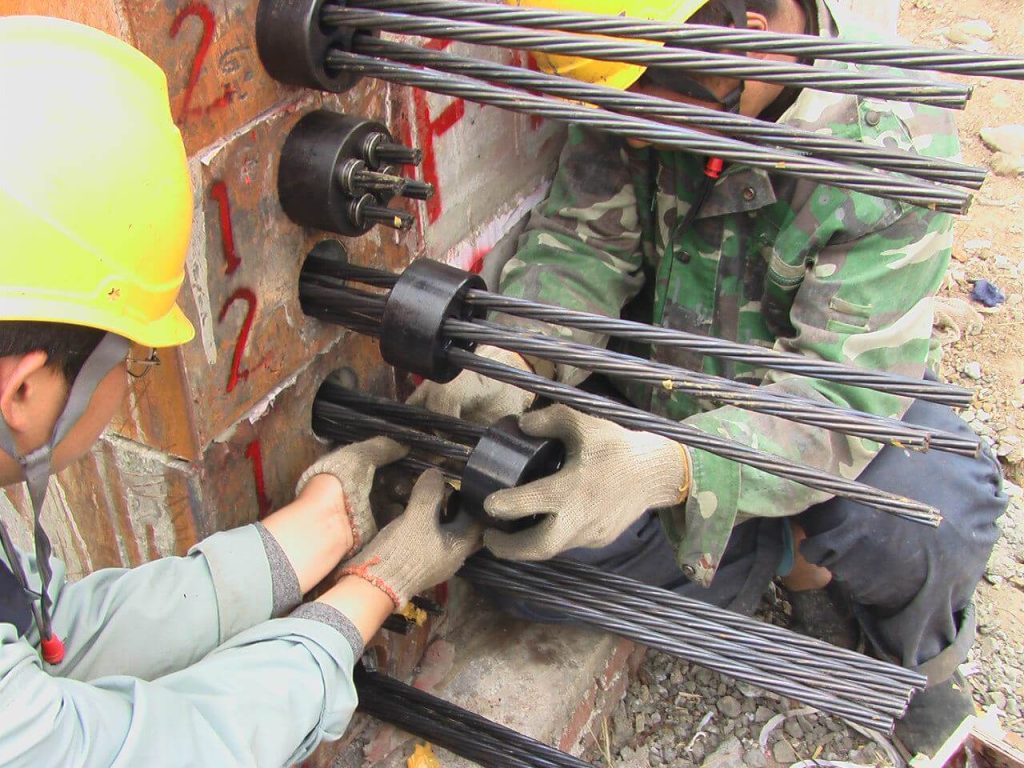


The core cause of steel strand unraveling after cutting is that cutting disrupts the original twisted stress balance of the strands. Specific reasons are as follows:
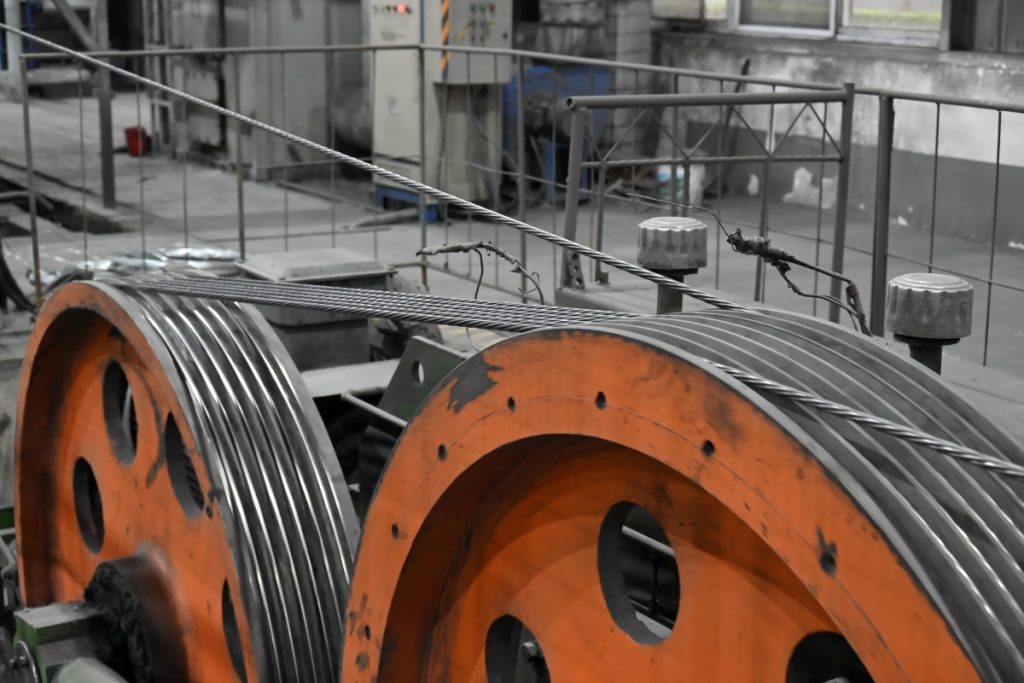
1. Stress Release
Steel strands are formed by twisting multiple steel wires at a fixed pitch, which creates a stable internal stress during production and keeps the wires tightly interlocked. Once cut, the stress constraint at the cut end is removed, and the outer wires will rebound due to residual stress, resulting in loosening and unraveling.
2. Non-standard Cutting Operations
- Cutting with ordinary cutting tools (e.g., abrasive saws) generates strong impact and friction on the strand ends, causing uneven stress on the wires and accelerating stress release;
- Failure to temporarily bind the area near the cutting point before cutting leaves the end wires unconstrained and prone to direct unraveling.
To prevent steel strand unraveling after cutting, the core principle is to restrain stress in advance before cutting and reinforce the ends after cutting. Specific operations are divided into three steps:
Before Cutting: Temporary Binding to Prevent Stress ReleaseBind the strand with high-strength iron wire or steel straps at positions 5–10 cm on both sides of the planned cutting point respectively, tightening and compressing firmly to prevent the end wires from unraveling due to residual stress rebound during cutting.
It is recommended to use specialized steel strand cutting machines (e.g., abrasive cutters equipped with stable fixtures) instead of ordinary abrasive saws for rough cutting, so as to reduce impact and pulling forces on the steel wires.
After Cutting: End Reinforcement and ProtectionUpon completion of cutting, add an extra binding at the position 5–10 cm away from the cut on both ends of each steel strand (two bindings in total). Bend and press the ends of the iron wire/steel straps tightly to prevent loosening.